

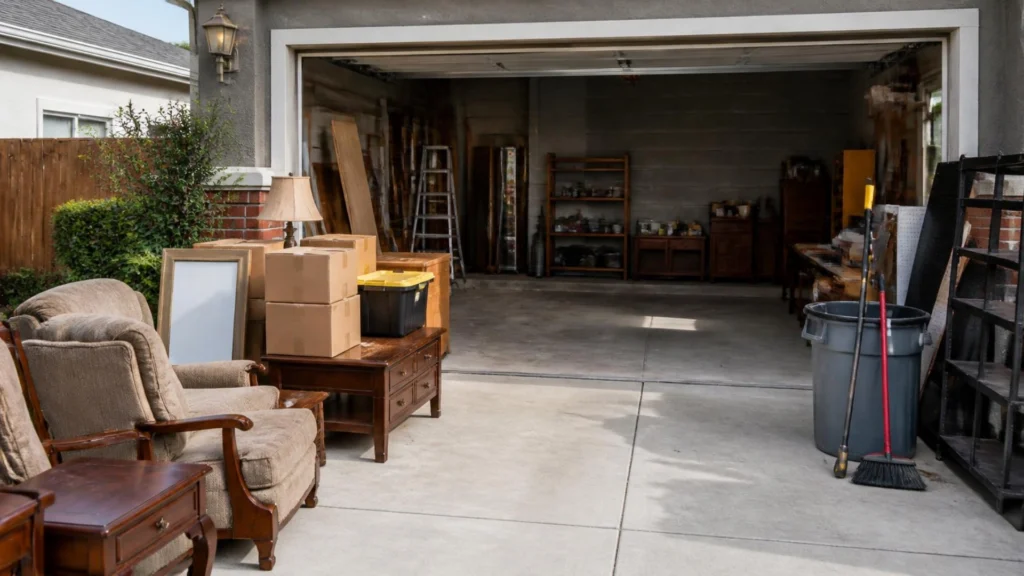
Getting rid of a lot of junk starts with a clear plan for what stays, what goes, and how everything will be removed.
Whether you are cleaning out a garage, preparing for a move-out, handling an estate, clearing a storage unit, finishing a renovation, turning over a rental, removing office items, or tackling a whole-house cleanout, the right approach saves time and effort.
Not every cleanout can be finished in one day. The amount of junk, access, labor, and removal method all affect how long the project takes. This guide covers practical steps to help you clear a large amount of junk without wasting your entire weekend.
Quick answer:
To get rid of a lot of junk without losing the weekend, choose how the material will leave before you start sorting. Protect essentials, separate hazardous or regulated items, use four destinations only, and give sale or donation items a hard deadline. Then use self-haul, a dumpster, or a crew for the remaining volume.
Table of Contents
Start With the Exit Plan, Not the Junk Pile
Before moving anything, decide how the junk will be removed. Sorting first and figuring out removal later can lead to extra lifting, repeated decisions, and piles that a hauler or facility ultimately rejects.
Walk the property and answer these six questions:
- What is the deadline? A move-out date, renovation schedule, or property turnover helps determine how much time and labor the cleanup needs.
- What areas are included? The rooms, garages, sheds, yards, or storage spaces in scope determine the size of the cleanup.
- What items must stay? Mark important belongings before removal begins so they do not get mixed with items being removed.
- What type of junk is it? Household goods, bulky furniture, yard waste, and construction debris each require different handling and disposal options.
- Do you have enough help and the right vehicle? Heavy items, large volumes, and limited vehicle space can change what you can safely remove yourself.
- Do you have private space for a dumpster? Available driveway or property space helps determine whether a dumpster is a practical option.
Before requesting a quote, take wide photos of each area and close-up photos of heavy or unusual items. Photos help estimate the volume, handling needs, and best removal approach before work starts.
Use This 90-Minute Plan to Take Control
Use the next 90 minutes to create a clear removal plan, not to finish the entire cleanout. The goal is to understand the scope, make decisions, and prepare the space so the actual removal goes faster.
Minutes 0-15: Set the Deadline and Boundaries
Start by defining what needs to happen, who is involved, and what decisions can be made before anything is removed.
- Define what “finished” looks like. Is the goal an empty garage, a sale-ready home, a cleared rental, or a debris-free work area?
- Identify who can approve disposal. Make sure the person removing items has permission to decide what leaves.
For estates, rentals, roommate situations, business records, or items that belong to someone else, confirm legal authority before removing anything.
Minutes 15-30: Photograph and Estimate the Scope
Get a clear picture of the project before sorting so you can understand the amount of work, access challenges, and removal needs.
- Walk through the property without sorting. Take photos of rooms, storage areas, and large piles before moving items.
- Record the details that affect removal. Note stairs, elevators, gates, parking access, carrying distance, bulky items, loose debris, and the approximate load size.
Photos help a removal provider understand the job and identify questions before arriving, but they may not always replace an in-person quote.
Minutes 30-45: Pull Out Special-Handling Items
Identify materials that may require separate handling before they get mixed into the general junk pile.
- Identify items that need separate handling. Look for paint, cleaners, batteries, propane, tires, electronics, refrigerant appliances, asbestos concerns, sharps, medical waste, concrete, soil, and treated wood.
- Do not mix these materials with ordinary junk loads. City of San Diego residents can drop them at the City’s household hazardous waste transfer facility free of charge, by appointment only and with proof of City residency, so book that slot early rather than on the day.
Minutes 45-60: Choose the Main Removal Method
Once you understand the project, choose the removal option that fits the amount of junk, available help, and property conditions.
- Pick the removal option that matches the project. Self-hauling, renting a dumpster, or hiring a full-service crew depends on the volume, labor available, deadline, placement options, and site access.
- Use selling, donating, and recycling as supporting routes. These options can reduce the load but may not be the main solution for a large cleanup with a deadline.
Minutes 60-90: Clear Access and Set Four Destinations
Finish the planning stage by creating clear paths and simple categories that make removal easier.
Create four clear categories:
- Keep
- Reuse by a fixed deadline
- Special handling
- Remove
- Make the categories easy to follow. Use colored tape, labels, or large signs to prevent items from being mixed again.
- Keep pathways clear. Do not spread items into driveways, sidewalks, alleys, or public areas where they can create access or disposal problems.
Skip the Planning – Send Us the Photos
We’ll review your space and give you a fast, accurate scope of work.
Sort a Large Cleanout Without Touching Everything Twice
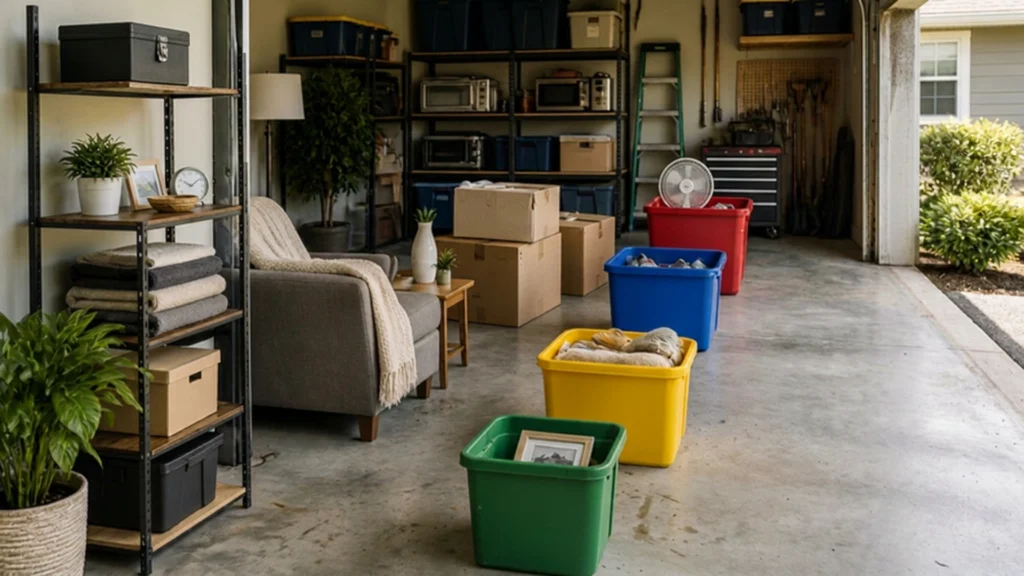
Use a one-touch approach during a large cleanout: each item should move closer to its final destination instead of being moved from pile to pile. Work on one defined zone at a time and keep a clear exit path so items can leave the property efficiently.
Protect Documents, Valuables, and Irreplaceable Items First
Start by setting aside items that could cause major problems if misplaced, damaged, or removed by mistake.
- Protect identification, legal papers, financial records, medication, keys, jewelry, photographs, digital devices, and items specifically claimed by family members or owners.
- Create a closed, clearly marked, off-limits area where these items can stay safe until the cleanup is complete.
Handling these items first prevents you from having to dig through removal piles later to find something important.
Limit Selling to a Few Items With Real Value
Selling can help recoup money, but too many listings can slow down cleanup and keep items sitting around.
- List no more than 3-5 high-confidence items during a deadline cleanout. This is a time-saving framework, not a rule about how much any single item is worth.
- Use sold-market prices as a guide instead of relying on optimistic asking prices.
- Set a firm pickup deadline for each item. If it does not sell by that point, move it to the next approved route.
The goal is to reduce the amount of material left behind, not to create a second project focused on selling.
Put a Deadline on Donations and Giveaways
Donations and giveaways should have a clear exit plan so they do not become another storage problem.
- Confirm acceptance before carrying items outside or making a trip across town.
- For local giveaway listings, use a clear deadline such as “must pick up by [time/date].”
- If the deadline passes, move the item into the planned removal load.
Do not allow a donation pile to remain after the main cleanout. Unclaimed items still need a final destination.
Choose the Fastest Practical Removal Method
Choose the removal option that best matches the amount of junk, available labor, access conditions, and deadline, rather than automatically choosing the cheapest option.
Method | Best When | You Handle | Main Delay Risk |
Self-haul | The load fits in one practical trip, and you already have a suitable vehicle and labor available | Sorting, carrying, loading, transporting, and unloading | Facility rules, long lines, rejected items, or extra trips |
Dumpster rental | Large amounts of accepted material will build up over several days, and there is private space for placement | All loading and keeping prohibited items out of the container | Delivery timing, permits, placement issues, weight limits, or material restrictions |
Full-service removal | Items are indoors, heavy, urgent, or difficult to access | Making decisions and protecting items that should stay | Scheduling and unclear scope if important details are not provided |
Mixed plan | Estate cleanouts, whole-house projects, or situations with valuable items mixed with true waste | Coordinating multiple removal routes | Too many pickups without clear deadlines |
Self-Haul When One Planned Trip Is Realistic
Self-hauling works best when the load is manageable, and you already have the right vehicle, labor, and disposal plan.
Before loading, confirm the facility accepts your materials and check requirements such as covered loads, unloading rules, and operating hours. Include the cost of vehicle rental, fuel, lifting assistance, and unloading, as well as the number of trips needed, before choosing this option.
A job that looks like one trip can quickly become several if the vehicle is too small or the disposal site rejects certain materials.
Rent a Dumpster for Self-Paced, Multi-Day Debris
A dumpster is a practical option for ongoing cleanouts where accepted debris will accumulate over several days, and you can handle loading yourself.
Before renting, confirm the rental period, weight allowance, accepted materials, placement location, and any property or HOA approval requirements. Some locations may also require permits.
For City of San Diego residents, placing a dumpster in the public right-of-way requires a Traffic Control Permit, and the City asks for at least three working days’ notice before the container goes in. That lead time alone can decide whether the dumpster is there in time for your weekend.
Hire a Crew for Speed, Carrying, and Indoor Access
A full-service removal crew can make sense when items are heavy, inside the property, difficult to access, or when you have limited help and a firm deadline.
This option is often useful for stairs, furniture, appliances, mixed household contents, or situations where you do not have a suitable truck.
Provide access details and photos of the items and spaces involved to get a more useful estimate. Clear information about stairs, gates, parking, carrying distance, and bulky items helps the crew understand the work before arriving.
Whether a job finishes in one visit depends on volume, access, and what the crew finds on arrival, so ask JunkMates to confirm that once they have seen the scope.
Heavy Items, Stairs, or a Tight Deadline?
Best Plan by Cleanout Type
Different cleanouts have different challenges, so start with the priority that prevents delays and choose the removal method that fits the material, access, and deadline.
Project | First priority | Likely main exit | Special consideration |
Garage cleanout | Clear a vehicle or crew path and isolate chemicals | Crew, dumpster, or one-trip self-haul | Paint, batteries, tools, fuel, and propane |
Whole-house move | Protect documents and set room deadlines | Crew or mixed plan | Giveaways need firm pickup deadlines |
Estate cleanout | Confirm authority and identify claimed items | Estate sale plus crew or dumpster for remaining items | Grief, records, valuables, and family approval |
Rental turnover | Photograph the condition and confirm property ownership | Crew for deadline cleanouts; dumpster for repair debris | Tenant property and local legal requirements |
Storage unit | Confirm facility access and move-out time | Crew or direct vehicle loading | Elevator access, gate hours, parking, and unit deadline |
Renovation | Separate debris by material and weight | Dumpster or construction-debris pickup | Construction and demolition rules, dense materials, and active work zones |
Office cleanout | Protect records and data-bearing devices | Scheduled crew or dumpster for renovation debris | Secure records, electronics, and loading access |
Yard or outdoor pile | Identify soil, treated wood, and green material | Dumpster, crew, or approved facility | Material separation and access limitations |
A mixed plan means combining more than one removal route, such as an estate sale plus a dumpster or crew for what is left over, when a single method cannot cover the entire project.
Not Sure Which Plan Fits Your Cleanout?
San Diego Rules That Can Derail a Weekend Cleanout
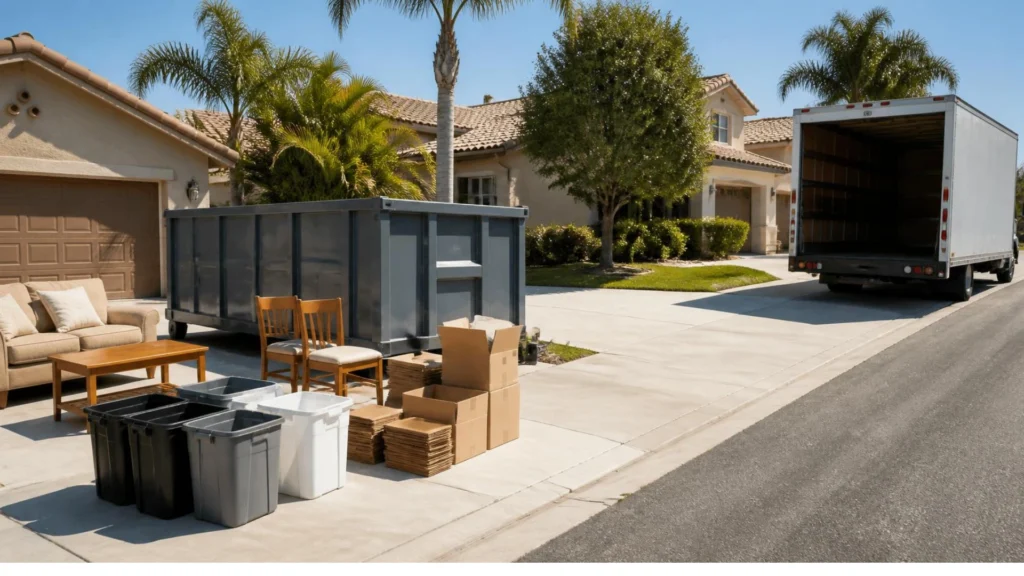
Before starting a large cleanout, confirm the rules that apply to your location. Requirements can vary by jurisdiction and property type, so check local rules before you start.
Do Not Build an Unauthorized Curb or Alley Pile
Keep junk on your private property until you have a confirmed removal plan. Placing furniture, debris, or large piles in streets, sidewalks, alleys, or other public areas can create access issues and may violate local rules.
Check your city’s requirements before moving materials outside your property boundary.
Separate Household Hazardous Waste Before Booking
Set aside materials that may need special handling before arranging removal. Examples include paint, cleaners, batteries, propane, electronics, tires, and other restricted items.
Do not assume these materials can go into a regular junk load or dumpster. Confirm the correct disposal option for your location before the cleanup begins.
Plan Dumpster Placement Before the Weekend
If you are renting a dumpster, decide where it will go before delivery day. Check available space, driveway conditions, access for the delivery truck, and any HOA or property requirements.
If a dumpster needs to be placed on public property, additional approvals or permits may be required. Planning placement early helps avoid delays when the cleanup starts.
Five Mistakes That Turn a Cleanout Into a Second Weekend
Avoid these common mistakes that create extra handling, delays, and unnecessary trips during a large cleanout.
- Starting without a booked or confirmed exit method. Sorting and moving items without a removal plan can leave you with piles that still need a place to go.
- Trying to sell every low-value object. Listing too many items can slow down the cleanup and turn a removal project into a long-term selling project.
- Driving to donation sites without checking acceptance. Confirm that items are accepted before loading your vehicle or making a trip.
- Mixing hazardous or regulated materials into the main load. Keep restricted items separate so they do not delay removal or create disposal problems.
- Blocking the driveway, hallway, stairs, elevator, or loading area with temporary piles. Keep access paths open so people can safely carry items out without having to move them multiple times.
FAQs
What is the fastest way to get rid of a lot of junk?
How do I clean out a house full of junk without getting overwhelmed?
Can I get rid of a house full of junk in one day?
Should I rent a dumpster for a whole-house cleanout?
What should I do with items that are still usable?
How do I get rid of a lot of junk without a truck?
Will a junk removal company take everything?
Get Your Weekend Back
Get a Free Junk Removal Estimate in San Diego
A large cleanout goes faster when you decide how the junk leaves before you decide what to do with it. Walk the property, set your four categories, and pick the removal method that matches your volume and deadline.
Once you know what’s left after selling, donating, and separating hazardous items, ask JunkMates for a free estimate on the rest. Get a free junk removal estimate in San Diego.