

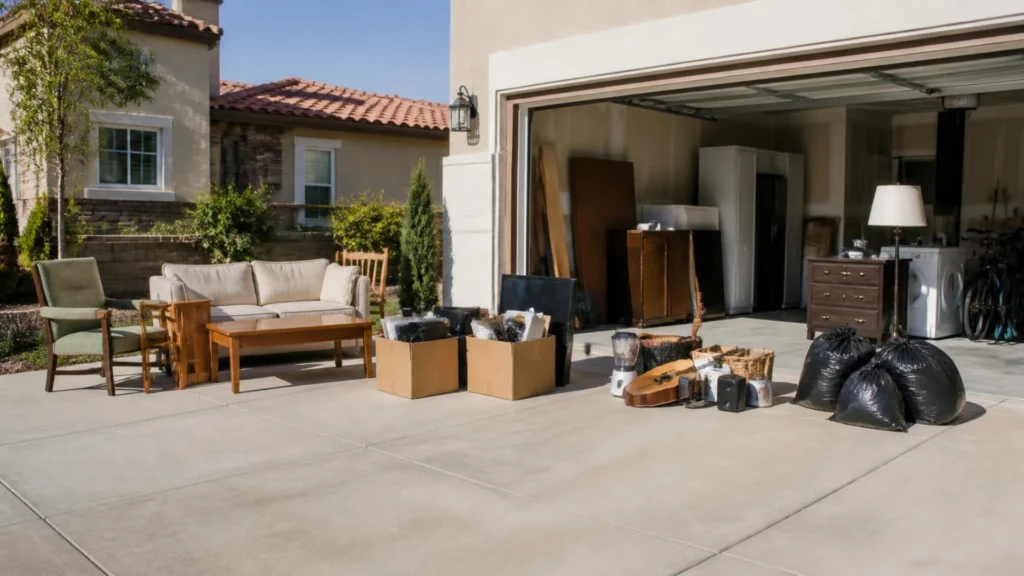
The cheapest way to get rid of junk depends on what you have, how quickly it needs to be removed, and how much work you can handle yourself.
For San Diego homeowners, renters, landlords, property managers, families handling cleanouts, and small-business owners, the lowest-cost option may be selling, giving items away, using an eligible program, self-hauling, or hiring help when the job requires it.
In this guide, “cheapest” means the lowest complete cost for a legal disposal method that can actually handle your items and meet your deadline. That includes more than the upfront price, since fuel, disposal fees, labor, time, access issues, and failed removal attempts can all increase the real cost.
We compare seven options by cost, time, and physical effort so you can choose the right approach for your cleanup.
Quick answer:
The cheapest way to get rid of junk is to sell, give away, donate, or use an eligible recycling program before paying for disposal. If the remaining material is true waste, self-hauling often has the lowest cash cost when you already have a suitable vehicle and safe help. Large or labor-heavy projects require a complete dumpster or removal quote.
Table of Contents
The 7 Cheapest Ways to Get Rid of Junk at a Glance
Not every junk removal option costs the same or requires the same amount of work. Before you choose one, compare the direct cost, the time involved, and how much lifting you’ll need to do yourself.
The table below gives a quick overview. We will explain each option in more detail later so you can choose the one that fits your budget, timeline, and the amount of work you’re willing to do.
| Option | Likely Direct Cost | Time Required | Physical Effort | Best For |
| Sell | $0; may earn money | High | Medium | Valuable, usable items |
| Give away | Often $0 | Medium | Low-medium | Usable items someone will collect |
| Donate | Often $0 if accepted | Medium-high | Low-medium | Clean, functional goods accepted by a charity |
| Hauler or specialty program | Included, free, or item-specific fee | Varies | Medium | Eligible items and residents |
| Self-haul | Facility fee plus transportation costs | Medium | High | Small loads when you have a suitable vehicle and can safely do the work |
| Dumpster rental | Quoted project price | Low-medium over several days | High | Large or ongoing projects where you’ll load everything yourself |
| Full-service junk removal | Quoted by item, load, and labor | Low | Low | Bulky, indoor, urgent, or labor-heavy cleanouts |
How to Find the Cheapest Option for Your Junk
The cheapest way to get rid of junk starts with sorting it. A few minutes of planning can help you avoid paying to remove items that could be sold, given away, or handled through another program.
- Step 1: Separate valuable items. Set aside furniture, tools, appliances, electronics, and other items that still have resale value. Listing these first may help cover some of your cleanup costs.
- Step 2: Separate usable donation or giveaway items. Gather clean, functional items that someone else can use. Check the donation acceptance guidelines before dropping off items, and offer only items in good, usable condition.
- Step 3: Pull out regulated and specialty recycling items. Keep items such as paint, chemicals, batteries, and certain electronics separate from the rest of your junk. These materials often require special disposal and should not go in regular trash, a dumpster, or a standard junk removal load.
- Step 4: Estimate the remaining volume and weight. Look at how much junk is left after sorting. The size and weight of the remaining load will help you decide whether self-hauling, a dumpster rental, or full-service junk removal is the most cost-effective option.
- Step 5: Compare transport, labor, time, and paid quotes. Consider more than the direct cost. Factor in disposal fees, fuel, the time you’ll spend loading and hauling, and how much physical work is involved. Then compare that against any quotes you receive for paid services.
Option 1: Sell Items That Still Have Real Value
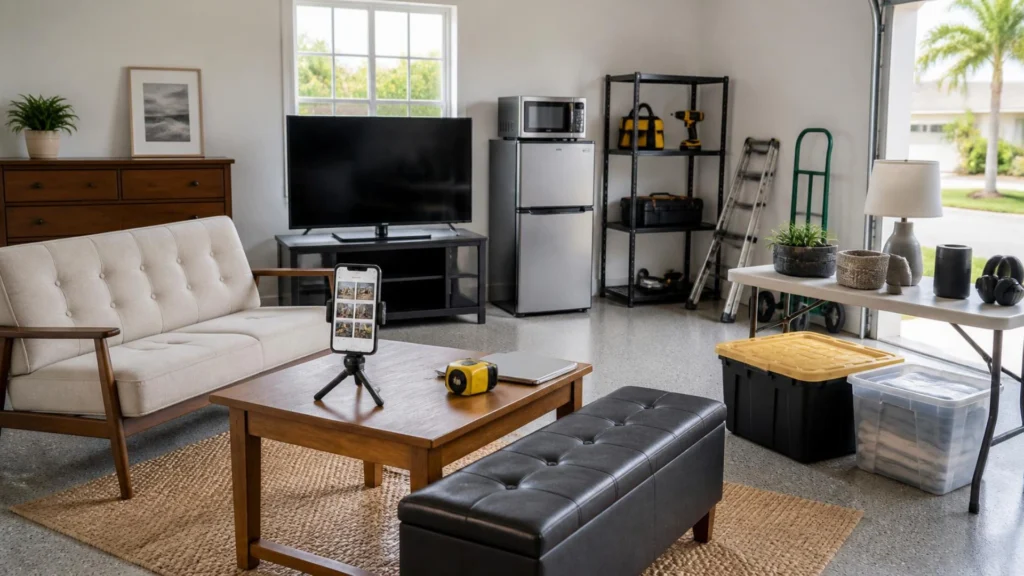
Selling is often the cheapest option because it costs nothing and may even earn you money. It works best for working appliances, quality tools, newer electronics, collectibles, and building materials with real resale demand.
Furniture can sell too, but condition and current style matter more than age. Don’t assume an older piece will sell just because it still works.
Check completed or sold listings instead of active asking prices. They show what buyers are actually willing to pay in your area.
Selling takes time and effort, including taking photos, writing messages, negotiating, and dealing with no-shows. Set a deadline, and if it hasn’t sold by then, give it away or donate it if it qualifies.
Option 2: Give Usable Items Away
Giving items away is often the next-cheapest option if they are clean, safe, and functional, but not worth the time to sell. Neighborhood groups, Buy Nothing communities, friends, tenants, and online marketplace “Free” listings can all help you find someone who will use them.
Write an honest description and include clear photos so people know exactly what they are picking up. Mention any damage or missing parts to avoid wasted trips and canceled pickups.
Arrange a specific pickup time before handing over the item. Do not leave an unattended pile on a public curb.
This option works best for everyday household items that still have useful life but little resale value. It can save disposal costs while helping someone who needs the item.
Option 3: Donate Accepted Furniture and Household Goods
Donating can be a great way to avoid disposal costs, but donation is not the same as disposal. Organizations accept items they can use or resell, so only clean, functional goods that meet their current guidelines are likely to qualify.
Before loading your vehicle or scheduling a pickup, confirm the item’s condition, dimensions, quantity, service area, and expected lead time. Also, ask whether the organization will carry items from inside the home or if everything must be placed in an accessible location.
In San Diego, the WasteFreeSD directory lists Goodwill as one local donation option for accepted items. Keep in mind that pickup is not available on demand and may require substantial lead time, so it may not be the best choice if you need items removed quickly.
If your items are not accepted, don’t force a donation drop-off. Move on to another option, such as giving them away if they’re still usable or comparing self-haul and paid removal for items that can no longer be donated.
Option 4: Use Your Hauler or a Specialty Recycling Program
Before paying for junk removal, identify the trash or recycling provider that serves your address. Ask about included bulky-item collection, extra pickups, preparation rules, limits, and appointment windows.
If you live in the City of San Diego, the City’s planned bulky-item pickup program is paused until further notice. There is no on-demand bulky pickup for single-family homes right now, but you can ask your council district about a Community Cleanup event, which is free when one is running in your area. Policies like this change, so confirm the current status with the City before planning around it.
Other cities, private haulers, apartment communities, and unincorporated County areas may offer different services.
Some items belong in specialty recycling programs rather than in regular trash or standard junk removal. Always confirm address, residency, quantity, and condition requirements before scheduling a pickup or making a trip.
Item | Program |
Household hazardous waste | City resident appointment program |
Electronics and selected recyclables | Approved local recycling outlets |
Mattress | Retailer take-back with delivery of a new mattress and stewardship program drop-offs |
Appliances and scrap metal | Item-specific recyclers or programs that may charge a fee |
Option 5: Haul the Junk to a Legal Facility Yourself
Self-hauling can be a low-cash-cost option, but it is not automatically the cheapest. It works best for a small or moderate load when you have the right vehicle, safe lifting help, enough time, and a facility that accepts your materials.
The true cost is more than the disposal fee. Use this formula before deciding:
Self-haul total = facility fee + vehicle/trailer rental + fuel + supplies + helper cost + repeat trips + value of your time.
Before loading, check the facility rules and current fees. The City of San Diego’s Miramar Landfill fees vary based on factors such as vehicle type, material, weight, and origin, and loads must be covered to avoid the current $50 uncovered-load fee.
Cost Factor | What to Consider |
Facility fee | Varies by vehicle, material, weight, and origin |
Transportation | Truck, trailer, rental costs, and fuel |
Labor | Your time or the cost of hiring help |
Supplies | Tarps, tie-downs, bags, and other materials |
Extra trips | Additional time and fees if one trip is not enough |
Do not assume every type of junk can be taken to Miramar or any other facility. Confirm acceptance rules before loading materials, especially for specialty items or restricted waste.
Not Worth Hauling It Yourself?
Option 6: Rent a Dumpster for a Large or Ongoing Project
A dumpster can be a practical choice for large cleanouts, but the lowest rental price does not always mean the lowest total cost.
- Best for: Remodeling debris, major cleanouts, estate projects, or other jobs that create a large amount of waste over several days. A dumpster works well when you can safely load the materials yourself and do not need a crew for lifting and hauling.
- Compare costs and terms: Check the container size, rental period, included weight, accepted debris types, delivery and pickup fees, extension charges, overages, and placement requirements before choosing a dumpster.
- Check placement rules: Make sure you have a legal location for the container. In the City of San Diego, placing a dumpster or container in a public right-of-way may require a Traffic Control Permit.
A dumpster is not automatically the cheapest choice for a large project. Compare the full cost against other options, including your labor, loading time, disposal limits, and whether hiring a removal service would save time and effort.
For a detailed comparison, see our guide Dumpster Rental vs. Junk Removal.
Option 7: Hire Full-Service Junk Removal
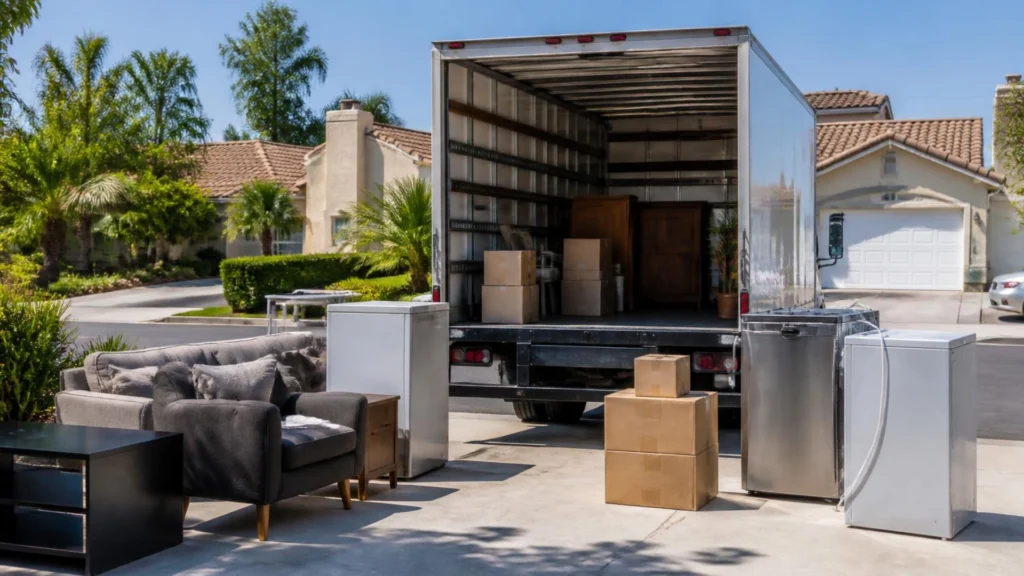
Full-service junk removal means paying for the lifting, loading, hauling, transportation, disposal, and time saved. It is usually not the cheapest option, but it is the lowest-effort choice and can be the better value when the job is large or difficult.
This option is a good fit for heavy furniture, indoor items, stairs, limited help, no truck access, or tight move-out deadlines. A removal team handles the physical work, so you don’t have to load and haul everything yourself.
Before booking, get a complete quote and confirm what is included, such as labor, hauling, and disposal. JunkMates offers free in-person estimates for residential and commercial jobs across San Diego County, and does not accept hazardous waste or chemicals. For typical price ranges by job size, see our full junk removal cost breakdown for San Diego.
You can reduce costs by sorting your items first. Sell valuable items, give away usable items, and separate specialty materials so you only pay to have what truly needs hauling removed.
Get a Free Junk Removal Quote
No lifting, no hauling – we handle labor, transport, and disposal.
Cheapest Option by Project Type
The cheapest method depends on what you have, how quickly it needs to be gone, and how much work you can safely handle yourself.
Project | Cheapest option to try first | Why | When to move to paid help |
One usable sofa | Give away or approved donation | Another person may collect it | No taker, poor condition, stairs, or deadline |
Old mattress | Retailer take-back or stewardship drop-off | CalRecycle and local agencies direct residents to mattress-specific recycling programs | No delivery, no transport, contamination, or urgent removal |
Working appliance | Sell, give away, donate, or appliance recycler | Reuse or metal value may avoid disposal | Indoor carrying, refrigerant rules, or no pickup |
Broken television or computer | Approved electronics recycling | It should not enter the ordinary trash | You cannot transport it or have a larger mixed load |
Small garage load | Self-haul after sorting | One legal trip may have the lowest cash cost | Vehicle rental, multiple trips, or heavy pieces erase savings |
Whole-house or estate cleanout | Mixed plan | Sell or donate usable goods before disposal | Deadline, access, and volume require a crew or dumpster |
Multi-day remodel | Dumpster quote | Debris accumulates over time | You cannot load it yourself or debris requires special handling |
Rush move-out | Give-away deadline, then full service | Free methods get a short chance first | Closing, lease, inspection, or travel dates cannot move |
How to Lower the Cost of Any Paid Junk Removal Option
Before paying for junk removal, take a few steps to reduce the amount of work and material included in the job.
- Remove sale, donation, and specialty recycling items first: Sell valuable items, give away usable items, and separate materials that require special recycling or disposal.
- Combine the remaining material into one planned job: Grouping everything can help avoid repeat trips and extra service costs.
- Send clear photos and list any heavy or unusual items: details about furniture, appliances, large debris, stairs, or difficult access help you receive a more accurate quote.
- Compare complete quotes, not starting prices: Look at the full cost, including labor, hauling, disposal, and any possible extra charges.
- Ask what happens if volume, weight, time, or access changes: Confirm how the final price may change if the load is larger, heavier, or harder to remove than expected.
- Make access easier only when it is safe: Clear pathways and remove small obstacles when possible, but do not move heavy items to the curb or outside just to reduce the price.
Once the free and specialty options are removed, ask JunkMates to price the actual remainder. The team can explain whether full-service removal or a dumpster rental is the more practical choice for the load.
Items That Need a Separate Disposal Plan
Some items cannot be treated like regular junk because they may have special disposal rules. Do not assume a standard disposal facility or junk removal service will accept them.
Items that may need separate handling include paint, solvents, household chemicals, batteries, propane cylinders, tires, electronics, refrigerant-containing appliances, concrete, soil, and treated wood. Asbestos and medical waste require extra care and may need licensed professionals for proper handling.
Before booking a service, tell the provider what items you have and confirm where they can be accepted. The cheapest disposal option and the regular JunkMates process should not be assumed to handle these materials.
FAQs
What is the cheapest way to get rid of junk in San Diego?
How can I get rid of junk for free?
Is it cheaper to take junk to the dump yourself?
Does San Diego offer free bulky-item pickup?
How do I get rid of junk if I do not have a truck?
What is the cheapest way to get rid of a couch?
Is a dumpster cheaper than junk removal?
Get Your Free Junk Removal Quote From JunkMates
Final Thoughts
The cheapest way to get rid of junk usually starts with reuse first. Sell valuable items, give away usable goods, use eligible recycling or collection programs, consider self-hauling when it makes sense, and choose a paid option only when it saves time, effort, or solves a bigger cleanup challenge.
Once you have removed anything that can be reused or handled through free programs, describe the remaining items to JunkMates. Request a recommendation and an estimate to determine whether full-service removal or another option is the right fit for your cleanup.